

Summary
- Enterprise-level marketing infrastructure, including multi-agent AI, autonomous execution, and full-funnel orchestration, is no longer only available to companies with million-dollar tech budgets.
- The average small to medium business (SMB) spends months setting up tools that were never meant to work together, losing money while the system is still under construction.
- The difference in AI adoption between enterprise (34%) and SMB (7%) is not due to lack of ambition, but lack of access, and this gap is quickly closing.
- FOCAS AMS™ is a deployment engine built into the FOCAS Framework™, grounded in methodology, that gives small businesses the capabilities of an enterprise stack from day one, without needing to be assembled.
- The 2026 deadline is real: AI marketing infrastructure is expected to yield an average ROI of 171%, and SMBs that delay are not only falling behind, they are financing the growth of their competitors.
The Construction Trap That’s Eating Up Your Year
The main issue for most small business owners is not marketing. It’s deployment.
Most of the time, the plan is good. The drive is there. But between signing up for the first tool and actually making money from the system, months go by. The owner is stuck in integration tutorials, watching YouTube videos about automation workflows late at night, and the business is still running on manual labor and follow-up text messages. That’s the build trap – and it’s the costliest place a small business can be.
The FOCAS Framework™ was designed by EthosM2 for small business owners who have outgrown their makeshift tools but can’t afford to pay an enterprise software vendor six figures and wait a year for implementation.
Almost a Year and Still Not Ready to Go
This is a scenario that keeps happening in the SMB market: a business owner decides to focus on marketing infrastructure. They look into platforms, buy subscriptions, maybe bring in a freelancer or two. Half a year later, they have a CRM that does not communicate with their email platform, a social scheduler they stopped using, and a landing page that converts at 1.2%.
Almost a year later, they are either exhausted and have returned to doing everything by hand, or they are starting from scratch with a new set of tools that promises to be different. The business has not expanded. The owner has lost almost a year. The revenue gap between them and a competitor running a proper marketing system has grown.
This isn’t a story about a business owner who made poor decisions. It’s about enterprise-level infrastructure being given to small businesses without the necessary implementation support that large businesses typically receive.
The Setup Cycle Most Small Business Owners Can’t Break Free From
The setup cycle typically goes like this – if you’ve experienced it, you’ll be familiar with every stage: from initial excitement to the inevitable technology implementation failure.
- Purchase a platform because of a feature demo that looked effortless
- Spend weeks on onboarding that assumes technical knowledge you do not have
- Realize the platform does not connect natively to the other tools in your stack
- Pay for a third-party connector or hire someone to build a workaround
- Get the system working at 60% capacity and call it done
- Watch the system break when one platform updates its API
- Start researching the next tool that promises to fix what the last one broke
The cruelest part of the loop is that each new tool feels like progress. The owner is actively working on the business. They are learning, configuring, optimizing. But none of that activity is generating revenue. Configuration is not execution. Setup is not deployment.
As per the U.S. Small Business Administration, around 50% of small businesses fail within five years. A major reason behind this failure is not the lack of product-market fit — it is operational drag. The burden of manually running the business while trying to build the system that would eventually run it automatically. This burden increases every month the system is not live.
The Original Intent Behind the Build
Don’t get me wrong: the idea behind the build was spot on. A small business that operates on a unified, automated marketing system – one that captures leads, nurtures prospects, converts customers, and generates content without the owner being involved in every step – has a fundamental advantage over one that doesn’t. The aim was never the problem. The method of delivery was.
The original plan was to build a growth engine that works: a steady flow of leads, automated follow-up, content that establishes authority, and analytics that pinpoint where the revenue is coming from. This is not a pipe dream. This is what enterprise marketing teams churn out every quarter. The real question is whether a small business can achieve the same results without the same number of employees and budget. The answer, in 2026, is yes — but only with the right deployment model.
Understanding “The Enterprise Stack” in 2026
This term is often used in a general sense, so let’s be specific about what it means. An enterprise marketing stack in 2026 is not just a set of costly software. It’s a system of AI-powered features that operates throughout the entire customer journey — from initial awareness to finalized revenue — with little manual involvement for each output.
What is Multi-Agent Orchestration and Autonomous Execution?
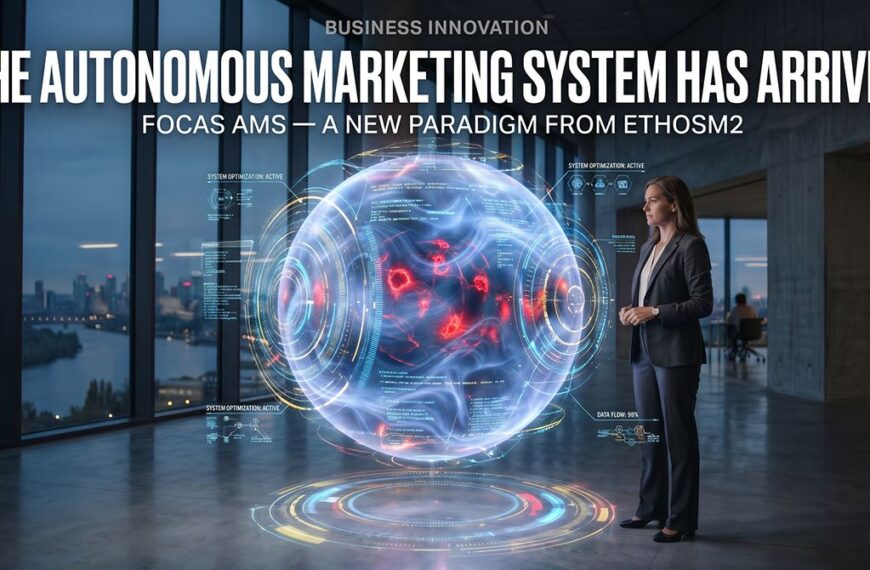
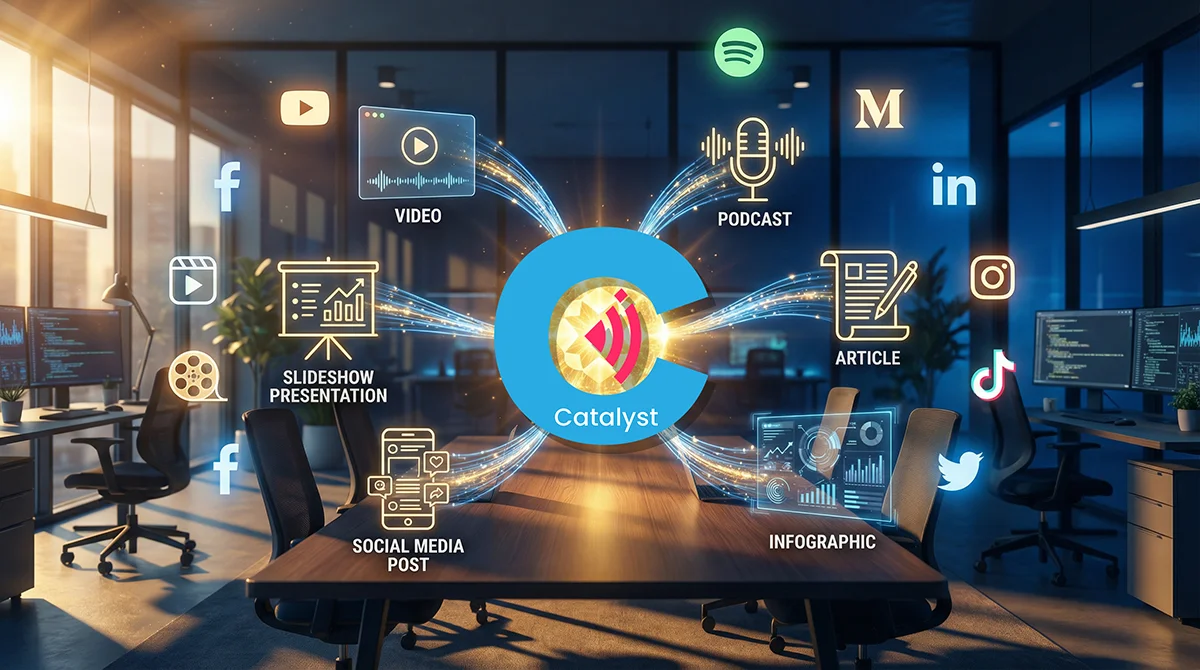
Multi-agent orchestration involves deploying specialized AI agents, each with a specific task such as content generation, campaign management, lead qualification, or performance analysis. These agents are coordinated to work together as a unified system rather than as isolated tools. For example, one agent might draft and schedule content while another monitors campaign performance and reallocates the budget. A third agent could qualify inbound leads and trigger the appropriate follow-up sequence. An orchestration layer ties all of these agents together and ensures that their output is aligned with the business objective. Learn more about how this approach is transforming marketing in FOCAS AMS.
When we talk about autonomous execution, we mean that the system is fully operational. It doesn’t need the owner’s approval for every step, it just works. This changes the human role from being an operator to a strategist. The owner sets the direction, reviews the results, and makes decisions. The system takes care of production, distribution, and optimization. This shift from operator to strategist is what enterprise teams have been enjoying for years, and what small and medium businesses have been missing out on. For more insights, read about the autonomous marketing system built for small businesses.
The 34% vs. 7% Gap: Enterprise Adoption vs. SMB Reality
The adoption data makes the divide visible. As of 2025, 34% of enterprise marketing teams are running production-level agentic AI systems. Among SMBs, that number is 7%. That is not because small business owners are less sophisticated or less motivated. It is because the platforms driving enterprise adoption were built for enterprise implementation budgets, enterprise IT teams, and enterprise timelines.
Small business owners are given the same tools as a Fortune 500 company, but instead of a six-person implementation team and a $200,000 services contract, they get a PDF guide and a chatbot support queue. The gap in adoption is not due to the technology available, but the lack of implementation support.
The Real Divide is Access, Not Ambition
Any small business owner who means business knows that the marketing infrastructure is important. Those who have not yet built it are not ignorant — they simply lack the resources to build the kind of infrastructure that enterprise-first platforms require. The problem is not a lack of ambition. It’s a lack of access.
Imagine a system that is already set up for your specific business needs, already integrated across various channels, and already anchored to a methodology that guides its actions. Not a toolkit. Not a platform. But a growth engine that is already deployed and functioning, which the owner can control from the very first day. This is what is needed to close the gap between large enterprises and small-to-medium businesses (SMBs) — and this is exactly the problem that the FOCAS Framework™ was designed to solve.
Multiple Tools and the Cost of Integration
As of 2025, the typical small to medium-sized business with a substantial marketing strategy is paying for six to twelve different tools. These could include an email platform, CRM, social scheduler, landing page builder, analytics dashboard, reputation management, booking system, and ad manager. Each tool was acquired to address a particular issue. However, when combined, they present a new challenge: the cost of integration.
Integration tax isn’t just about money, although the costs of subscriptions can accumulate quickly. It’s also about the time you spend each week getting tools to communicate with each other, reconciling data that doesn’t match across platforms, and manually completing handoffs that the system was supposed to automate. Every gap between tools is a gap that the owner must fill with their own time. This time has a price, and it increases every month that the system remains fragmented.
When the Owner Becomes the Systems Integrator
When a small business owner starts spending more time configuring their marketing stack than running their business, the stack has failed them. This is not an edge case. It is the default outcome when enterprise-architected platforms are sold to small businesses without the implementation infrastructure those platforms were designed to run alongside. The owner becomes the systems integrator by default — not because they are qualified for it, but because no one else is doing it. And a founder spending twenty hours a month on integration work is a business that is paying enterprise-level time costs while getting zero enterprise-level output.
Meet FOCAS AMS™ — The Deployment Powerhouse
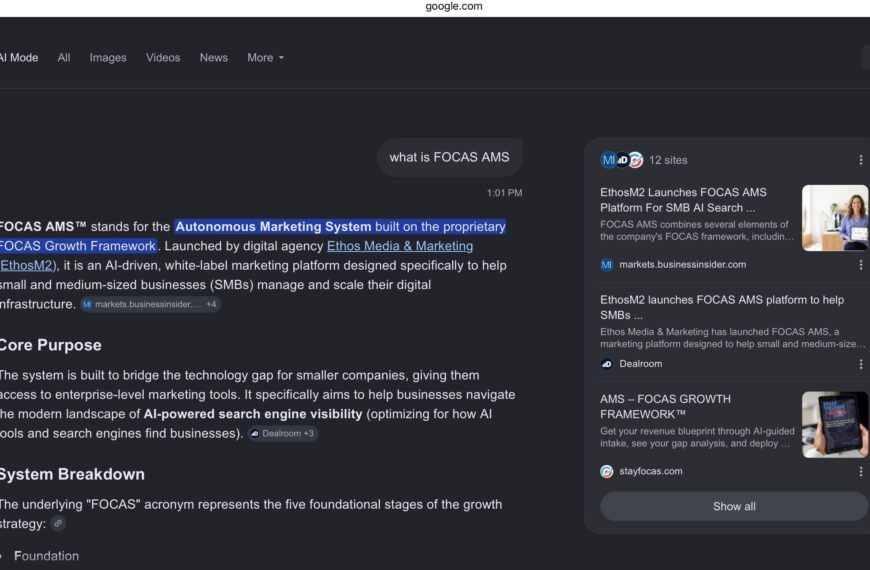
FOCAS AMS™ (Automated Marketing System) isn’t something you buy and set up. It’s a pre-assembled, methodology-based deployment that brings enterprise-level marketing capabilities to a small business on day one. This difference is crucial. Most tools provide the parts. FOCAS AMS™ provides the fully operational system, offering a comprehensive approach similar to the latest AI marketing trends for SMBs.
The role of AMS in the FOCAS Framework™
The FOCAS Framework™ works in five stages: Foundation, Operations, Conversion, Amplification, and Scale. AMS is the driving force behind all five stages. It doesn’t belong to one stage, but rather it is woven into the entire framework, performing the necessary tasks for each stage. The Foundation stage sets up the infrastructure. The Operations stage gets the system up and running. The Conversion stage sets up the mechanisms for revenue. The Amplification stage increases reach across various channels. The Scale stage increases output without increasing staff. AMS is what makes this progression systematic rather than theoretical.
More Than Just Another Tool to Build
When we say “methodology-anchored”, we mean that the system does more than just automate tasks. It operates within a defined strategic framework. Every piece of content, every automated sequence, every campaign that the system runs aligns with a business objective within the FOCAS Framework™. This alignment is what sets a deployed growth engine apart from a costly collection of automations that lack a cohesive strategy.
Many marketing automation tools do not have a specific methodology and will simply automate whatever you instruct them to. This leaves the strategic thinking entirely up to the business owner. AMS changes this dynamic by having a built-in methodology. The system knows what to execute at each stage of the customer journey because the framework instructs it on what is required at each stage. The business owner is in charge of strategy, while the system takes care of production and execution. This is the enterprise operating model, and it is now available to businesses with a much smaller budget.
Five Key Results Delivered by FOCAS AMS™
Instead of focusing on the features, it’s more beneficial to focus on the actual results. Here are the five key results that small businesses can expect from FOCAS AMS™ starting from day one:
- AI-driven content production — consistent, on-brand content across formats and channels without the owner writing every word or managing a content team
- Automated lead capture and nurture sequences — prospects are captured, qualified, and moved through a structured follow-up system that does not require manual management
- Full-funnel campaign orchestration — coordinated campaigns that run across email, social, and search with consistent messaging and aligned timing
- Reputation and authority management — systematic review generation, response automation, and brand authority building that compounds over time
- Performance analytics and optimization signals — clear, actionable data that shows where revenue is coming from and where the system should be adjusted
Each of those capabilities is something an enterprise marketing team delivers through a combination of specialized staff, expensive platforms, and dedicated operations bandwidth. FOCAS AMS™ delivers all five through a single deployed system — coordinated, integrated, and running from day one.
The Profit-Based Question That Guides Everything
Every infrastructure decision a small business makes should be evaluated against one question: does this generate profit, and how quickly? Not “does this have good features” or “does this integrate with my current tools.” Profit. Speed. Yield. That question is the filter that uncovers the true cost of the build trap and the true worth of a deployment model.
When a company takes eight months to set up a marketing stack, the cost is not just the subscription fees paid during that time. It’s the income that a working system would have brought in during those eight months. That’s the hidden cost — the accumulating loss of leads not captured, prospects not nurtured, conversions not made because the system was not up and running.
FOCAS AMS™ speeds up the process. Instead of spending months configuring the system, it’s deployed. This means you can start making money sooner. In a market where 74% of executives who invest in AI marketing infrastructure see a positive return on investment in the first year, when you deploy is not just an operational detail. It’s a financial decision.
What the Enterprise Stack Access Really Means
Enterprise stack access isn’t about buying a license and gaining access to a dashboard. It’s about a business that starts off with a functioning lead capture system, automated follow-up sequences that are already mapped to the buyer journey, scheduled content publishing, and a performance layer that tracks what’s working. This is not the experience that most small and medium-sized businesses (SMBs) have had with marketing technology. However, this is precisely the experience that FOCAS AMS™ aims to provide.
For a corporate marketing team, the infrastructure is usually handled by experts before the team even begins to execute. Implementation teams, solutions architects, and customer success managers construct the system, quality check it, and deliver it ready to go. Small businesses have never been able to afford this model. The FOCAS deployment model changes this — offering the same implementation-first approach to businesses that previously could not afford it.
Start Deploying on Day One, Not After Six Months
Day-one deployment and month-six configuration are not just about time. They are about how marketing infrastructure should be delivered to small businesses. Month-six configuration means six months of subscription costs without any system output. It means six months of the owner’s time being consumed by setup instead of strategy. It means six months of revenue that the system was not generating because it was not live.
Deployment on day one means that the system is generating results before the owner has had a chance to reconsider the decision. Leads are being captured. Sequences are running. Content is being published. The owner can see the system in action — which means they can start guiding it, fine-tuning it, and scaling it instead of still trying to finish constructing it.
Reach Your Audience, Save Time, Increase Revenue
When you have an enterprise stack that works for you, you can reach your audience through email, social media, search, and direct response. You can send the same message through all channels at the same time. Most small and medium businesses (SMBs) can only dream of this level of coordination. With FOCAS AMS™, it’s a reality. When you can reach your audience through all channels, you save the time you used to spend managing each channel by hand. When you save time, you can spend more time on strategy and sales, which increases your revenue. Your revenue will increase even more because the system is doing the work that used to take up all your time.
The 2026 Opportunity
The AI marketing infrastructure industry isn’t standing still. More businesses are adopting this technology, and the benefits of deploying early are starting to add up. Industry forecasts suggest that the AI marketing sector is growing at a compound annual growth rate of over 12%. Companies that are building their infrastructure now, instead of sitting on the sidelines, are creating advantages that will be hard to overcome by 2027.
The 2026 timeline is particularly significant for small businesses as large corporations are already significantly adopting this technology. Thirty-four percent of large business teams are operating production agentic systems. When small business adoption reaches that same level – which the current trend suggests it will – the early adopters will have months or even years of compounded advantages built into their systems. They will have established authority, nurtured audiences, and optimized conversion infrastructure. The businesses that deployed in 2025 and 2026 will not just be ahead – they will be structurally more difficult to surpass. For a deeper dive into the challenges faced by small businesses in adopting new technologies, check out how AI support intelligence solves technology implementation failure.
It’s also the time before AI-driven search environment changes completely redefine how small businesses are discovered. Generative Engine Optimization — the act of creating content and authority signals that bring a business to the forefront in AI-generated search responses — is not something to worry about in the future. It’s a competitive factor right now. Businesses that have been consistently publishing authoritative content through a deployed system are already gathering GEO signals. Businesses that are still setting things up aren’t gathering anything. The window of opportunity is open. But it won’t stay that way forever.
AI is No Longer a Competitive Advantage, It’s Now a Baseline Infrastructure
AI ceased to be a differentiator the moment enterprise teams started treating it as a given. When 34% of enterprise marketing operations are running autonomous agent systems in production, the businesses using those systems are not ahead of the curve — they are operating at the current standard. The curve has moved. What was experimental in 2023 is now the baseline expectation for a professionally run marketing operation, and that baseline is migrating down-market rapidly.
For small businesses, this reframe matters. Deploying AI marketing infrastructure in 2026 is not a bold strategic bet. It is the equivalent of getting a business email address and a website in 2010 — the minimum viable infrastructure for being taken seriously in your market. The businesses that will struggle in 2027 and 2028 are not the ones that tried AI and failed. They are the ones that watched it happen from the sideline while their competitors built compounding advantages they cannot replicate quickly.
The High Cost of Waiting in an AI-Driven Search Environment
- For every month that you don’t have a content system deployed, you’re missing out on the accumulation of GEO signals in AI-driven search environments
- Leads that aren’t converted and end up in a competitor’s automated nurture sequence instead of yours represent a permanent loss of revenue, not a deferred one
- Authority in any market category is based on time: a business that has been consistently publishing structured content for a year has a clear advantage over a latecomer who can’t close the gap in just two months
- Manual marketing operations grow at a linear rate with the owner’s time, while automated systems scale geometrically with the time they are deployed, which means that for every month you delay, the gap in output increases exponentially
- Reputation signals, such as reviews, citations, and brand mentions, increase over time. A business that starts managing its reputation systematically in the first quarter will be in a structurally stronger position at the end of the fourth quarter than one that starts in the third quarter
Generative Engine Optimization is the act of building the depth of content, topical authority, and structured brand signals that cause AI-powered search tools, including ChatGPT, Perplexity, Google’s AI Overviews, and similar platforms, to show your business in generated responses. This is not something to worry about in the future. Businesses are being recommended or left out of AI search results right now, today, based on the authority signals they have or have not built.
Businesses that have already implemented content systems, consistently publish content, build topic coverage, and generate structured data are accumulating these signals every week. On the other hand, businesses that are still configuring are not accumulating anything. In a search environment where the answer engine selects one or two businesses to recommend in a particular category and location, the difference between being mentioned first and not being mentioned at all is not a ranking difference. It’s a revenue difference.
Delaying is not an idle stance. Each week you postpone is another week your competitors gain the advantage while you remain stationary. The AI-led search environment does not pay off for intentions. It pays off for a track record of execution. And a track record of execution only accumulates when the system is actually up and running.
What The Market Figures Really Mean: Over 12% CAGR and 171% Average ROI
The AI marketing infrastructure market is expanding at a compound annual growth rate of over 12%, and the financial benefits for businesses that deploy are not conjecture — they are documented. Data from the industry indicates that AI marketing investments are expected to yield an average ROI of 171%, with 74% of executives noting positive returns in the first year of deployment. These are not figures exclusive to enterprises. They demonstrate what happens when a business stops configuring and starts implementing through a properly deployed system.
When a small business owner thinks about whether this is the right time to deploy, these figures make them rethink the question. The danger isn’t in deploying. The danger is in the months of revenue that are lost while the build continues, the increasing authority gap that grows with each week of inactivity, and the structural disadvantage of joining a maturing AI-adoption market as a latecomer rather than an early deployer. The window for 2026 is open. The data suggests deploying now — and the FOCAS Framework™ is the deployment model designed to make that happen.
Quit Constructing. Begin Implementing.
The enterprise stack is no longer unattainable for a small business — but accessing it still necessitates the appropriate implementation model. FOCAS AMS™ is that model: a methodology-based, pre-constructed marketing machine that provides small business owners with enterprise-level capabilities from the get-go, without the need for months of configuration, the integration tax, or the owner becoming their own systems integrator. The Authority Ceiling, which has kept small businesses from reaching their full potential, is a structural issue — and the FOCAS Framework™ is the structural solution. Quit constructing. Begin implementing.
Commonly Asked Questions
- What Exactly Is FOCAS AMS™ and Who Are Its Target Users?
- How Does FOCAS AMS™ Differ From a Typical Marketing Automation Tool?
- What Does Immediate Deployment Actually Entail in Real Terms?
- What Is GEO and Why Is It Important for Small Business Owners in 2026?
- What Is the FOCAS Framework™ and How Does AMS Integrate With It?
These are the questions that are often asked when small business owners first come across the FOCAS deployment model. The responses provided below are straightforward — devoid of marketing jargon, no lists of features. Just clear and concise descriptions of what the system is, what it does, and why it is significant for a business operating in 2026.
Before you delve deeper into whether FOCAS AMS™ is the right infrastructure for your business, you need to know one thing: the questions that follow aren’t about features. They’re about results. Each answer is centered around what the system can do for a small business, not what it includes.
The common thread in all of these responses is the difference between a tool and a deployed system. Keep this difference in mind as you read, because it’s the heart of what sets FOCAS AMS™ apart from any other marketing technology a small business owner has probably come across.
What is FOCAS AMS™ and who is it designed for?
FOCAS AMS™ is a pre-installed, AI-powered marketing system that is built within the FOCAS Framework™ — a five-stage growth strategy developed by EthosM2. This is not a platform that you buy and set up. It is a working system that implements enterprise-level marketing capabilities into a small business from the moment it is installed. Content creation, lead generation, automated nurture sequences, full-funnel campaign management, reputation management, and performance analytics — all of these are operational from the first day.
FOCAS AMS™ is designed for small to mid-sized business owners who need more than manual marketing operations but can’t afford or don’t have the time to implement enterprise software. If your business is generating real revenue, serving real customers, and you need a marketing system that doesn’t require your constant attention to operate, then FOCAS AMS™ is for you. It doesn’t matter what industry you’re in, what matters is that your business is ready to grow and you need the infrastructure to support that growth. Learn more about how FOCAS AMS™ is built for the small business authority gap.
What Sets FOCAS AMS™ Apart From Marketing Automation Tools?
Marketing automation tools perform tasks. FOCAS AMS™ implements a strategy. This is not a minor difference, but rather the core distinction between a tool and a system. Most automation platforms provide workflow builders, sequence triggers, and publishing queues. They automate whatever you instruct them to, implying that the strategy, content direction, campaign structure, and optimization logic are still entirely the responsibility of the owner or their team.
FOCAS AMS™ works in a unique way because it is rooted in the FOCAS Framework™ approach. The system doesn’t just automate tasks — it carries out the specific tasks required by each stage of the framework, in the correct order, in the right output format, and in line with a clearly defined business goal. This is what the difference looks like in practice:
- A marketing automation tool sends an email sequence when you build the sequence, write the emails, define the triggers, set the timing, and tell it who to send to
- FOCAS AMS™ runs a coordinated nurture system across email and social, aligned to your buyer journey, publishing content that builds authority while the sequence converts — all executing simultaneously without the owner managing each component
The owner’s role in a FOCAS AMS™ deployment is strategic direction and outcome review — not operational management of individual automations. That shift in role is what frees up the time and cognitive bandwidth that most small business owners are currently spending inside their tools instead of inside their business.
What Does Deployment on Day One Really Look Like?
- Your lead capture system is up and running, connected to an automated system for qualification and follow-up
- Your content calendar is filled out and publishing on schedule across your priority channels
- Your automated nurture sequences are mapped to the buyer journey and active for new contacts
- Your reputation management system is generating review requests and managing responses
- Your performance dashboard is tracking the metrics that connect directly to revenue outcomes
Deployment on day one means the system is up and running before the owner has even finished their first week with it. Not “partially configured” or “ready to build on” — it’s operational. It’s producing output. Running sequences. Publishing content. Capturing leads. The implementation work is done before handoff, not after. This is the implementation-first model that enterprise teams take for granted and that SMBs have never had access to at a viable price point — until now.
In other words, onboarding FOCAS AMS™ is not about training, but about deployment. The business owner learns by managing a system that is already functioning, rather than trying to build a system while also trying to run their business. This key difference eliminates the setup loop altogether because there is no setup phase for the business owner to get stuck in.
What this means is that you start making money from the first day. Any leads you capture on the first day are immediately entered into a fully operational nurture system. Any content you publish on the first day immediately starts building authority signals. If you’re a business that’s been stuck in configuration mode with other tools for months, the difference is immediate and quantifiable.
What is GEO and Why is it Important for Small Business Owners in 2026?
Generative Engine Optimization (GEO) is the process of building content depth, topical authority, structured data, and consistent brand signals that will cause AI-powered answer engines, such as ChatGPT, Perplexity, Google AI Overviews, and other similar platforms, to feature your business in generated responses. Traditional SEO was optimized for a ranked list of links. GEO, on the other hand, is optimized to be the answer that the AI recommends when a potential customer asks a question related to your business. GEO is important for small business owners in 2026 because the search behavior of buyers is changing rapidly. More people are getting business recommendations directly from AI tools than from scrolling through page one results. The businesses that are currently accumulating GEO signals, through consistent, authoritative, structured content, are the ones that will be recommended. Businesses that are not consistently publishing are invisible in this environment, regardless of the quality of their product or service.
What Is the FOCAS Framework™ and How Does AMS Fit Into It?
The FOCAS Framework™ is a five-stage business growth methodology developed by J. Marcus Howard and EthosM2. The five stages are Foundation, Operations, Conversion, Amplification, and Scale. Each stage addresses a specific layer of business infrastructure — from getting the foundational brand and positioning right, through building the operational systems that execute consistently, to scaling output without scaling headcount or owner time investment. Discover how the FOCAS AMS plays a crucial role in this framework.
FOCAS AMS™ is an automated engine that drives the operational layer of the framework and links through each subsequent stage. It’s not a standalone product, but rather the system that allows the framework to be executed at the speed and consistency that small businesses need to compete with enterprise-resourced competitors. Without AMS, the framework is a methodology. With AMS, it’s a running system.
It’s crucial to understand the significance of this integration. A methodology without an execution infrastructure is merely a plan. An execution infrastructure without a methodology is just automation — tasks that are run without any strategic guidance. The FOCAS Framework™ and FOCAS AMS™ are designed to function as a single, unified system. The framework provides the strategic architecture, while AMS automatically, consistently, and on a scale that a small business team couldn’t achieve through manual effort alone, executes against that architecture.
For small business owners who have been operating without a clear growth strategy or automated execution system, incorporating FOCAS AMS™ into the FOCAS Framework™ represents a fundamental shift in their business growth approach. It’s not just another tool to manage, but a new operating model to implement. This is the difference that makes a conversation with EthosM2 worthwhile — and it all starts with a single discovery call.


 By
By

 By
By